
Vitamin C — often listed as ascorbic acid — is widely celebrated for supporting immunity, especially during periods of stress or illness. However, its physiological role extends far beyond a simple immune boost. It is a fundamental vitamin for collagen synthesis, efficient wound healing, and the optimization of iron absorption. As a potent antioxidant, it tirelessly neutralizes free radicals, effectively reducing systemic inflammation and protecting your cells from oxidative stress.
What’s less commonly emphasized is how directly vitamin C impacts the skin’s structural integrity. Because the skin is a living organ, its internal levels of vitamin C closely mirror those found in your bloodstream. In other words, when you consume it, your body transports this vital nutrient to every dermal layer, from the inside out.
As these levels rise, they act as a catalyst for fibroblast activity, significantly ramping up collagen production. This leads to a physically thicker, more resilient skin barrier and a visibly renewed, glowing appearance. By supporting the skin’s natural regeneration cycle, vitamin C ensures your complexion remains as robust as your internal health.
Source: Mariam Antadze
Delivery Through Diet Over Topicals
While vitamin C is a favorite in topical skincare, its effectiveness is often hampered by the challenges of molecular stability and absorption. The skin’s primary function is to act as a barrier and thus is naturally selective. This means many topical formulations struggle to penetrate the lipid-rich stratum corneum efficiently.
In contrast, internal delivery via eating or injections uses the body’s highly sophisticated vascular network. When vitamin C is ingested, skin cells — from the deep dermis to the surface epidermis — readily absorb the nutrient directly from the bloodstream, ensuring a more uniform distribution than a serum can provide.
Because vitamin C is a water-soluble micronutrient, the body cannot store it for long-term use. This makes consistent daily intake a non-negotiable for skin health. While current standard recommendations hover around 75 mg for women and 90 mg for men, these are often viewed as minimums to prevent deficiency rather than the optimal levels required for metabolic excellence and vibrant skin.
Kiwi Research
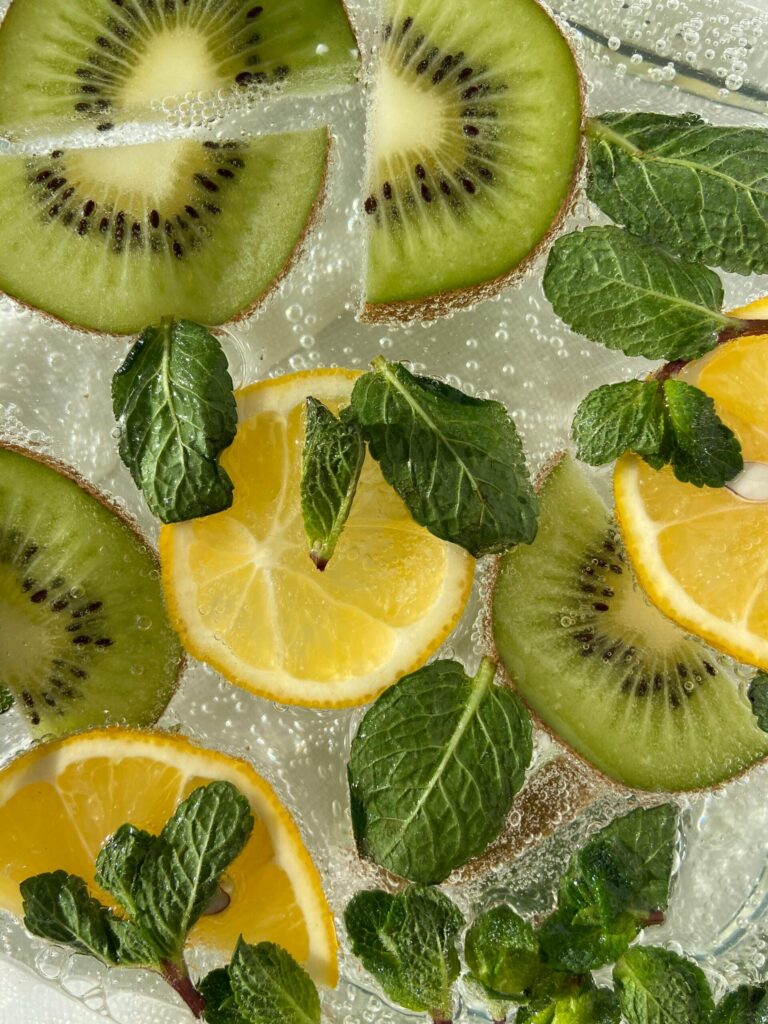
Groundbreaking research underscores this inside-out approach. An eight-week study conducted by researchers at the University of Otago demonstrated that individuals who increased their daily vitamin C intake to approximately 250 mg — the equivalent of roughly two gold kiwifruits — saw measurable improvements in skin thickness and density. This strengthening is a direct result of enhanced collagen cross-linking and accelerated epidermal cell turnover. By fueling the body internally, you provide the raw materials necessary for the skin to better renew itself at a cellular level.
High Vitamin C Sources
In case you do not wish to marry the habit of eating two kiwis a day, there are several other high vitamin C options to propose to your gut. Diversifying your intake ensures you receive a broader spectrum of co-factors and secondary phytonutrients that support overall absorption.

Small yet mighty vitamin C sources sea buckthorn berries and hibiscus tea (Sources: Burcu Koleli and Trường Nguyễn Thanh)
Sea Buckthorn
Sea buckthorn is incredibly dense in nutrients and serves as a powerhouse of omega fatty acids, vitamins A and E, and protective antioxidants. With vitamin C levels ranging from 250 to 3,900 mg per 100 grams depending on the species, these berries can contain anywhere from twice to nearly 40 times the ascorbic acid found in kiwis.
These berries’ incredibly robust shrubs thrive in the world’s harshest environments, from salty coastal soils to nutrient-poor mountain terrain where temperatures can drop as low as -40°C. This environmental stress forces the plant to concentrate its nutrient profile for survival. Whether enjoyed as a tart juice or blended as a concentrated powder into smoothies, this resilient berry offers deep nourishment to support skin that reflects that same strength and vitality.
Hibiscus Tea
More than just a striking flower, hibiscus brews into a vibrant, ruby-red tea that is naturally rich in vitamin C. At around 43 mg per cup, it offers a steady and sippable source of this essential nutrient that you can enjoy throughout the day. It also contains unique anthocyanins that work alongside vitamin C to provide a double layer of antioxidant defense. For optimal vitamin preservation, prepare it as a cold brew to avoid breaking down the heat-sensitive ascorbic acid molecules.
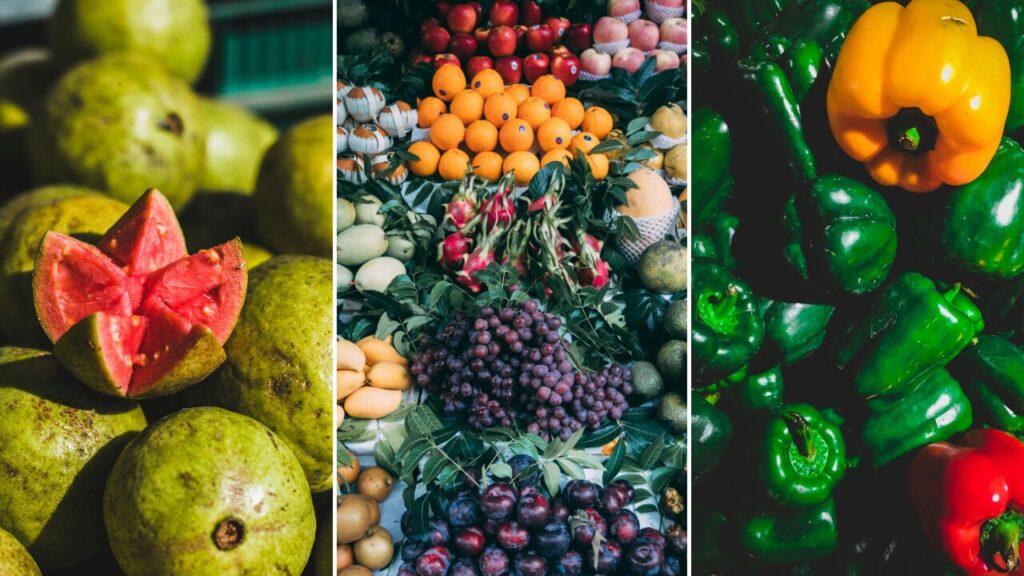
Guava, fresh fruit, and capsicums rich in vitamin C (Sources: Divyang Chandi, Taryn Elliott, and Rahul Pandit)
Capsicum & Broccoli
For savory options, bell peppers and broccoli deliver impressive amounts of vitamin C, providing approximately 127.7 mg and 81 mg per 100 grams, respectively. These vegetables are simple, accessible, and highly effective additions to a nutrient-rich diet, especially when eaten raw or lightly steamed. Incorporating these into your evening meals ensures your body has a consistent supply of vitamins even during your final meals of the day.
Guava
Tender and tropical, guava is exceptionally rich in vitamin C and delivers around 228 mg per 100 grams. This is roughly three times the concentration found in kiwis, making it one of the most efficient fruit sources available. It is also packed with dietary fiber, antioxidants, and a range of beneficial plant compounds that support digestive health and glowing skin. You can often find it fresh, frozen, or dried through specialty grocery services or at your local Asian market.
While topical treatments certainly have their place in a modern routine, true skin transformation begins from within. When you prioritize nourishing the body at a cellular level, the skin naturally follows by becoming stronger, thicker, and more radiant.
This content is for informational purposes only and is not intended as medical advice. Consult a qualified healthcare professional for personalized guidance.