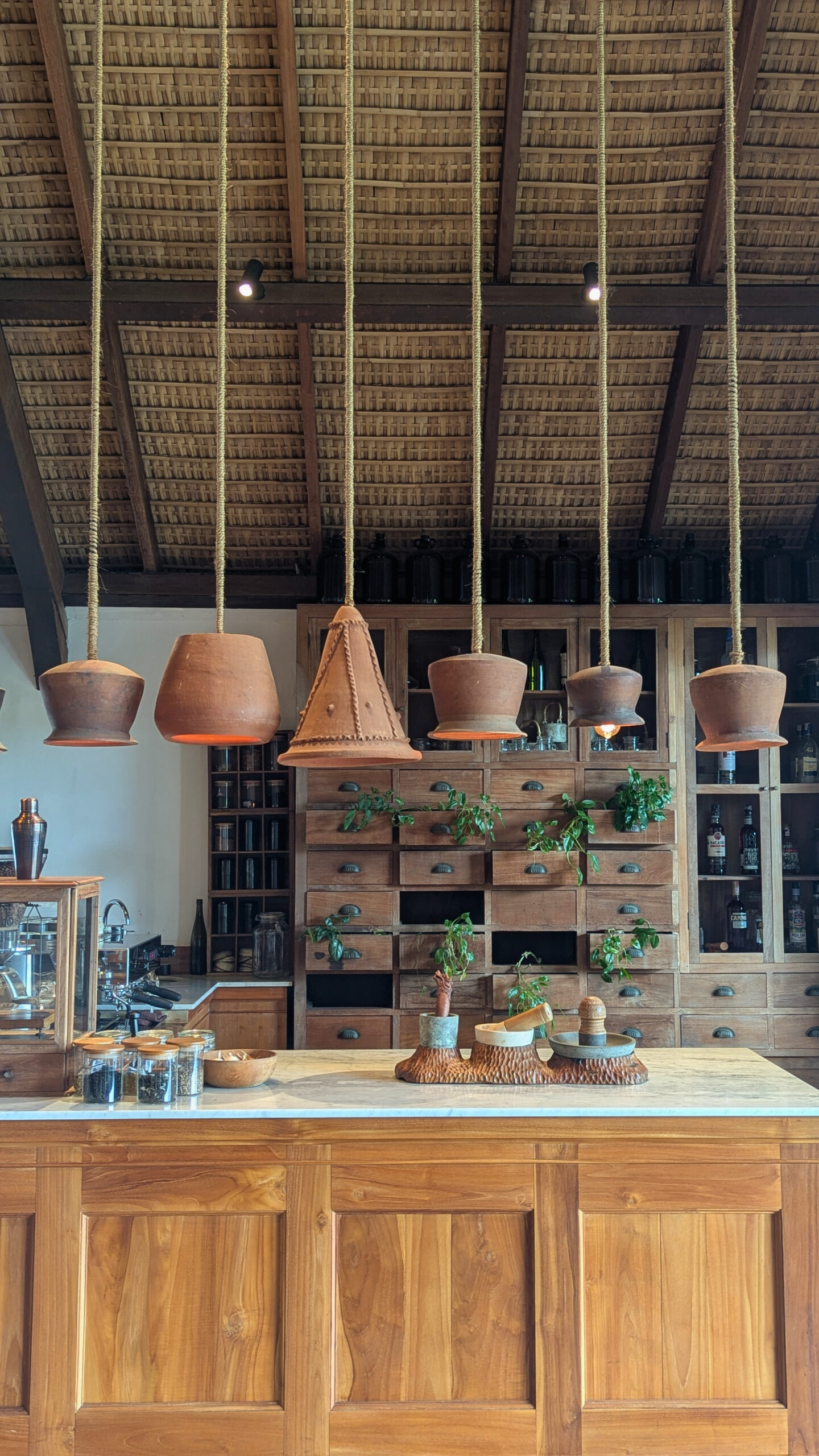
Hospitals are designed to be clinical and emotionally vacant — a blank canvas built to triage crises. But when St. Vincent Medical Center, the oldest hospital in Los Angeles, shuttered its doors in 2020, its abandoned corridors stood as a haunting relic to systemic collapse. Now, the historic facility has been repurposed for Hospital of Emotions, an expansive four-floor pop-up exhibition.
Within these cold operating rooms and patient wards, over 70 artists have mapped the vast spectrum of human sentiment, anchoring the space with dedicated sectors for sadness, fear, anger, hope, resilience, gratitude, love, and joy.
By injecting new narratives into the abandoned infrastructure rather than erasing its history, the exhibition showcases the powerful contemporary trend of adaptive reuse. The most compelling installations actively weaponize the existing interiors, converting aseptic spaces into immersive environments. From calculated structural manipulations to unapologetic, raw-material execution, here are the 8 definitive installations that masterfully reclaimed the hospital’s history.
Jonathan Elkies
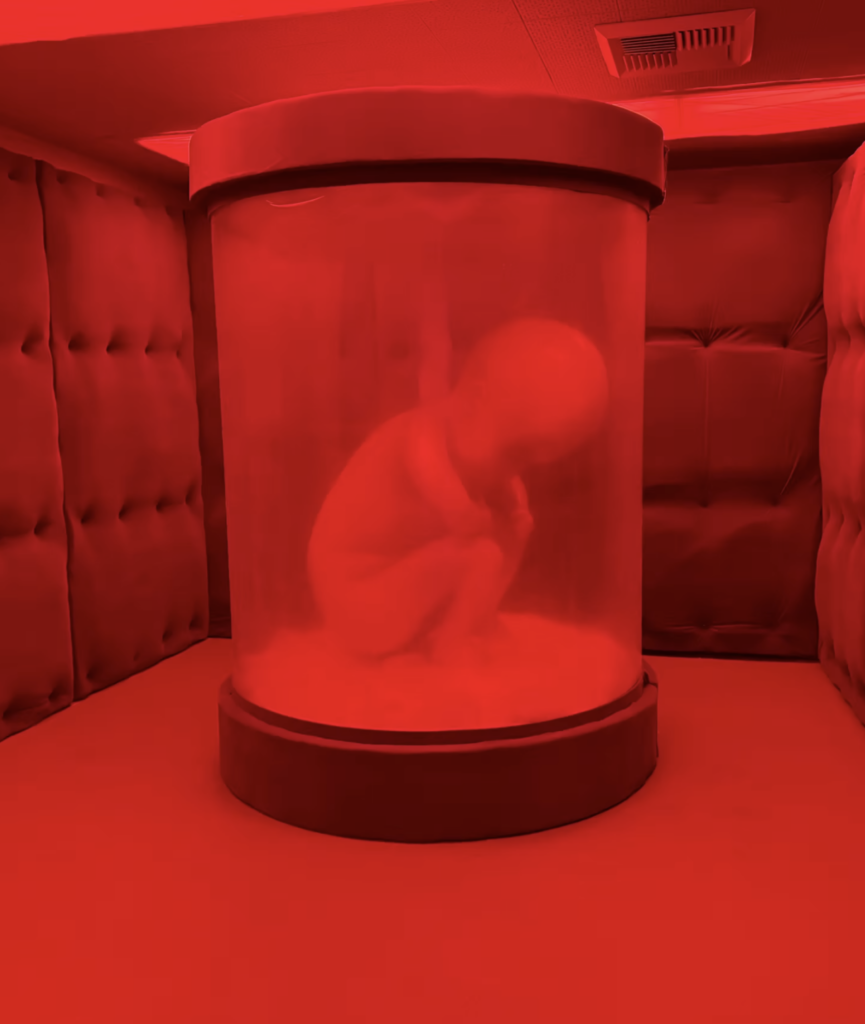
Kicking off the show in Room 1, artist Jonathan Elkies explores the boundaries of emotional resilience within a heavily cushioned, crimson chamber that isolates the viewer through a psychological artifact. At the center of this alarming space rests an oversized human fetal specimen encased in a clear acrylic vault, serving as a jarring reminder of fragile origins and unyielding survival.
The Transfusion – Michelle Lougee
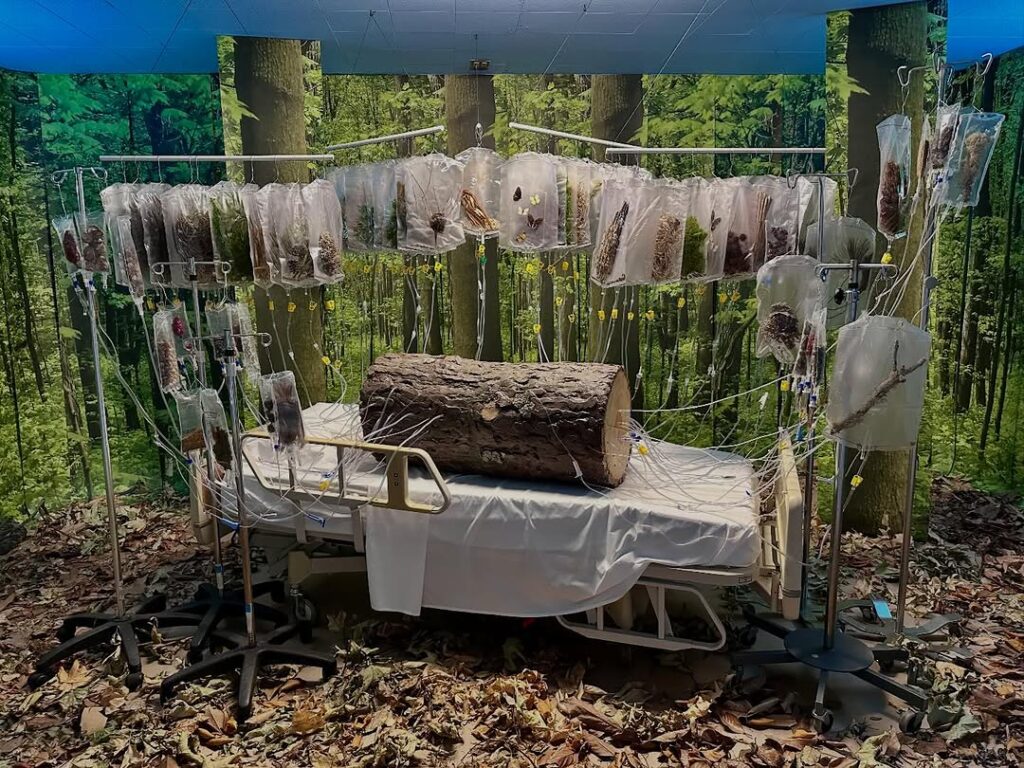
In Room 57, sector Hope, Massachusetts-based sculptor and fiber artist Michelle Lougee presents The Transfusion, a commentary on survival and regeneration. Within this space, a raw tree stump rests on a patient bed, hooked to medical IV lines that infuse the artist’s signature hand-crafted discarded materials into the wood like an artificial lifeforce.
The installation stages a vivid collision between natural decay and clinical intervention, questioning whether humanity is poisoning nature or desperately trying to keep it on life support. By transforming environmental waste into vibrant, flowing lifelines, Lougee reframes these sterile hospital apparatuses as a powerful testament to ecological repair and endurance.
The Other Side – Dongpu Ling
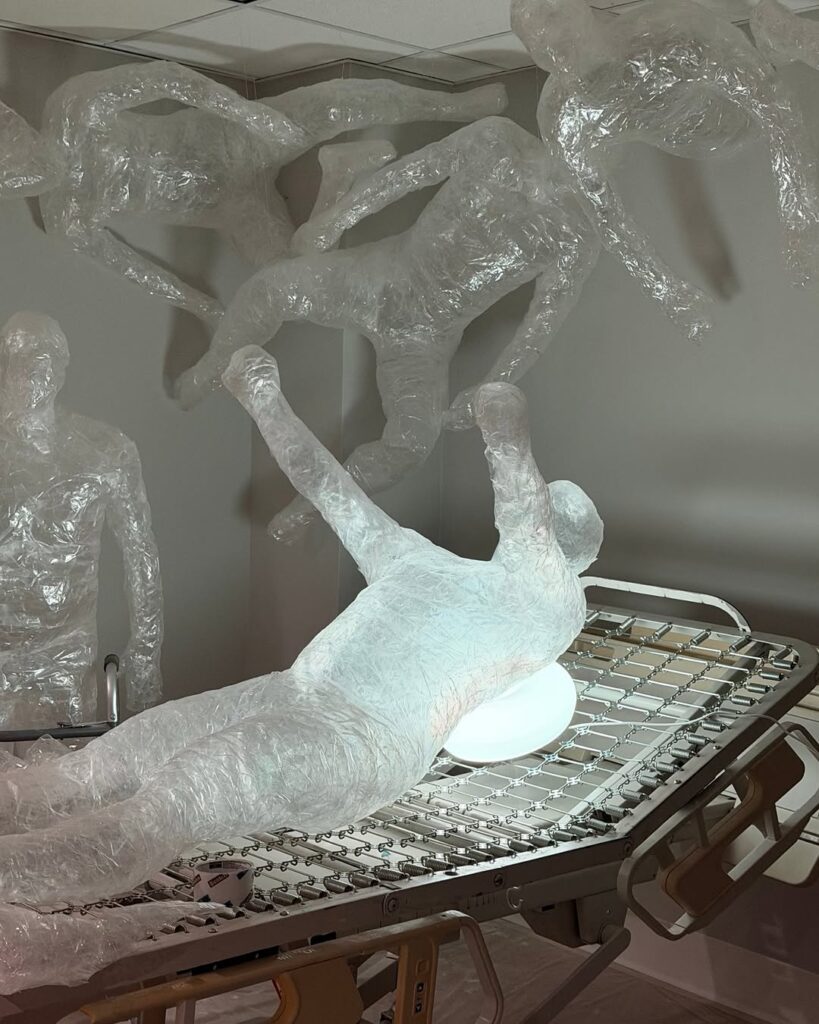
Haunting Room 26, Shanghai-born and Los Angeles-based intermedia artist Dongpu Ling presents The Other Side, a striking manifestation of the profound fear of the unknown. Inspired by her deaf grandfather’s final weeks — during which he witnessed visions of floating ghosts suspended over his hospital bed — the space forces a confrontation with the line separating clinical reality from the spectral subconscious.
The installation immerses viewers in a fracturing mind, utilizing transparent, hollow mannequins constructed from masking tape to give physical shape to these final, intangible memories. Marking the exact eighth anniversary of her grandfather’s passing, Ling transforms the cold ward into an interactive repository for grief, technological data, and hidden human fear.
Delivered – Heriberto Gomes
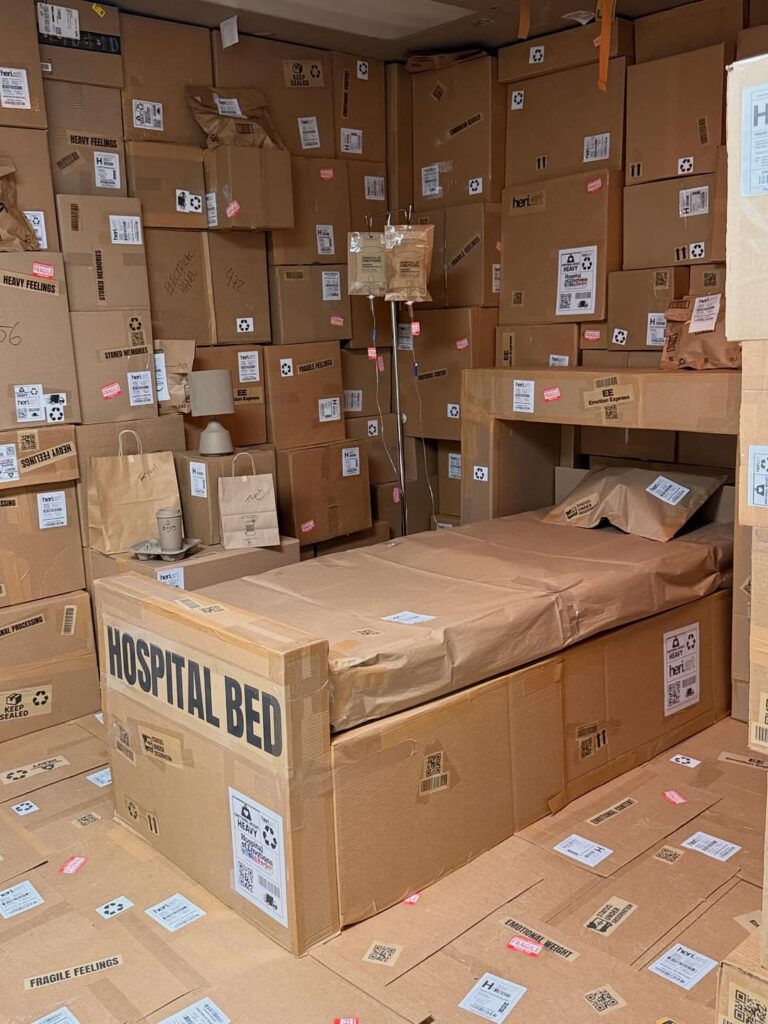
In sector Sadness, Room 29, Miami-based contemporary artist Heriberto Gomes presents Delivered, a specialized behavioral intervention that transforms everyday material waste into a display of modern isolation. Piled high within a clinical setting, an overwhelming mountain of shipping boxes forms a labyrinth of emotional accumulation and compulsive consumption.
The installation uses the visual language of logistics to dissect the hidden psychological toll behind what we purchase, store, and struggle to let go of. By framing these packages as temporary emotional containers for anxiety, loneliness, and emptiness, Gomes reveals that what arrives at the door is often a placeholder for something unresolved — hinting that behind the cardboard lies a heavy sorrow that cannot be easily unboxed.
DRIP – Lisa Waud
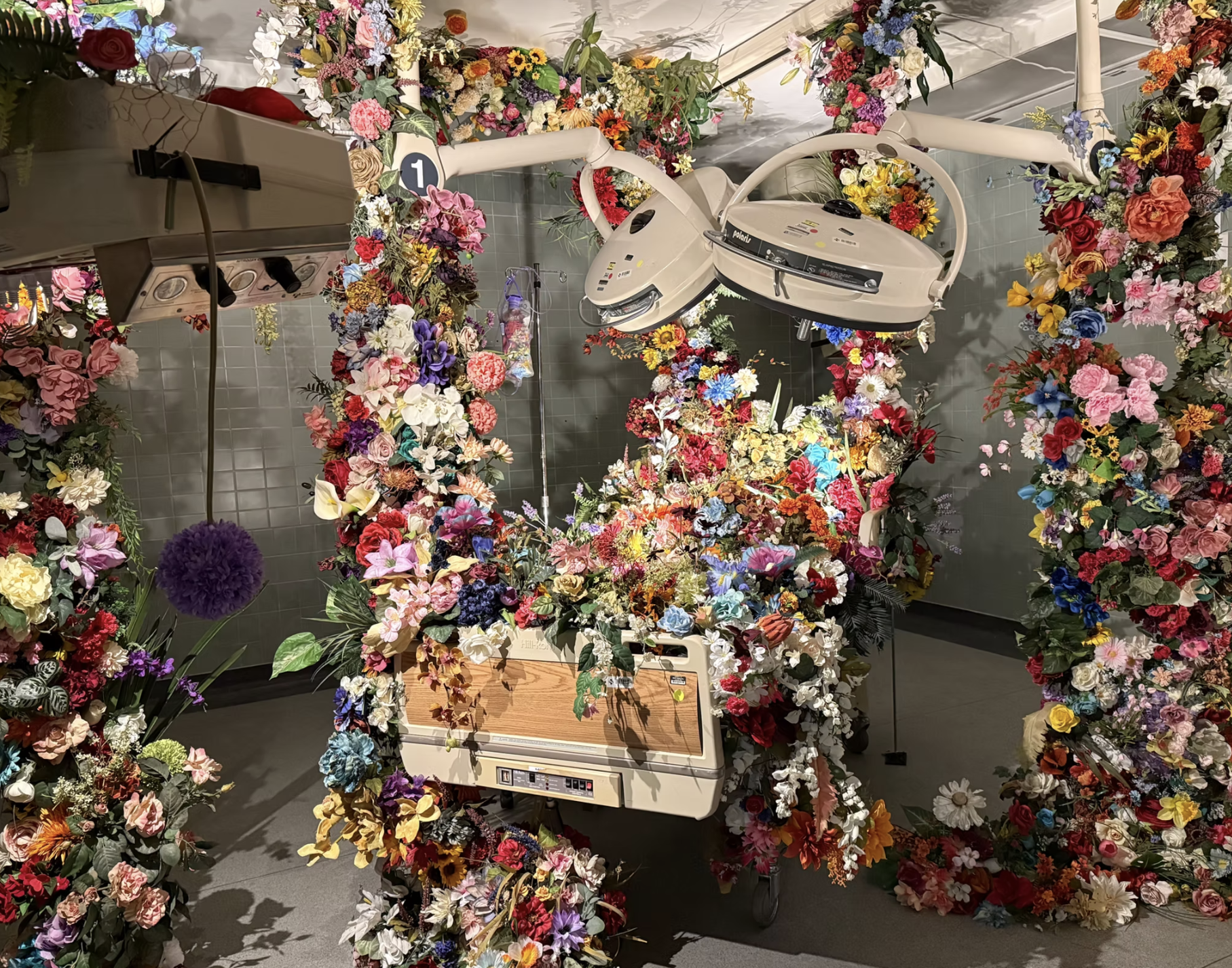
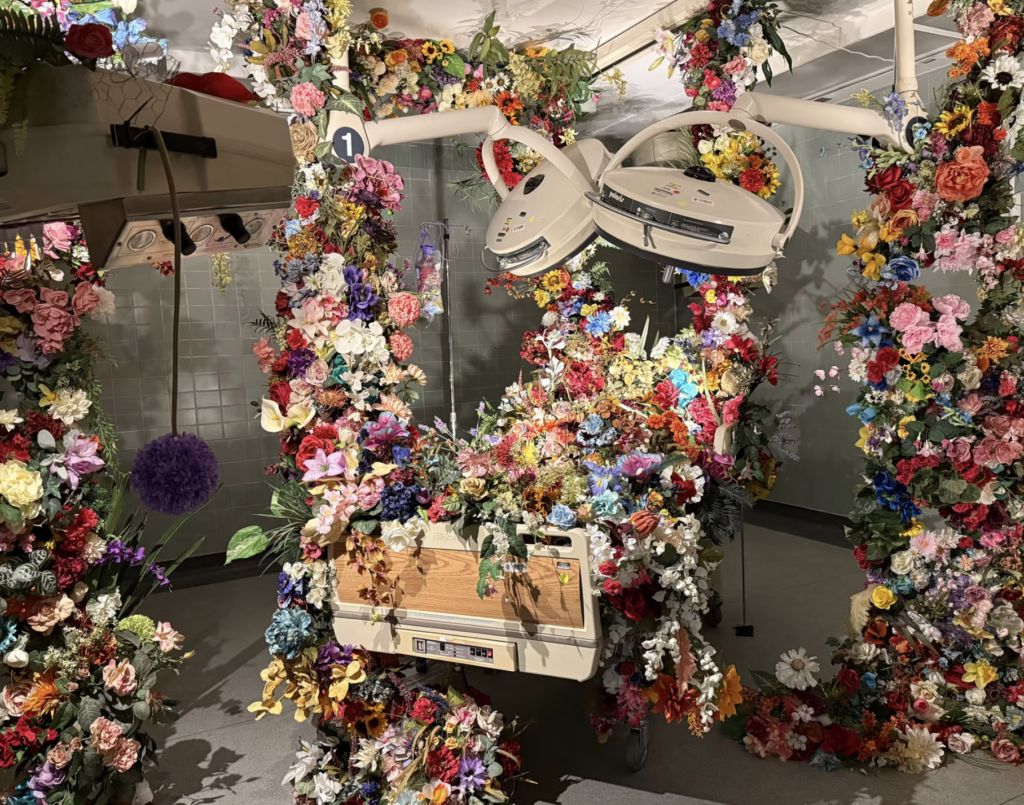
In Room 11, California-based botanical artist and experiential designer Lisa Waud presents DRIP, an immersive environment that treats joy not as a fleeting thought, but a physical, cumulative presence. Grounded in horticulture and low-waste environmental ethics, Waud uses a deluge of locally sourced, plant-based materials to intervene directly within the clinical interior.
The site-specific installation captures the connection between growth and decay, using a botanical overflow to saturate the abandoned operating room until it transforms into a tangible, living force. By structuring the dense flora to echo natural land art, Waud engineers a shared cultural experience that offers a necessary pause button — proving that joy, much like nature itself, can become a contagious, unyielding intervention capable of completely reclaiming a broken space.
Breathworks – Anna Matsumoto
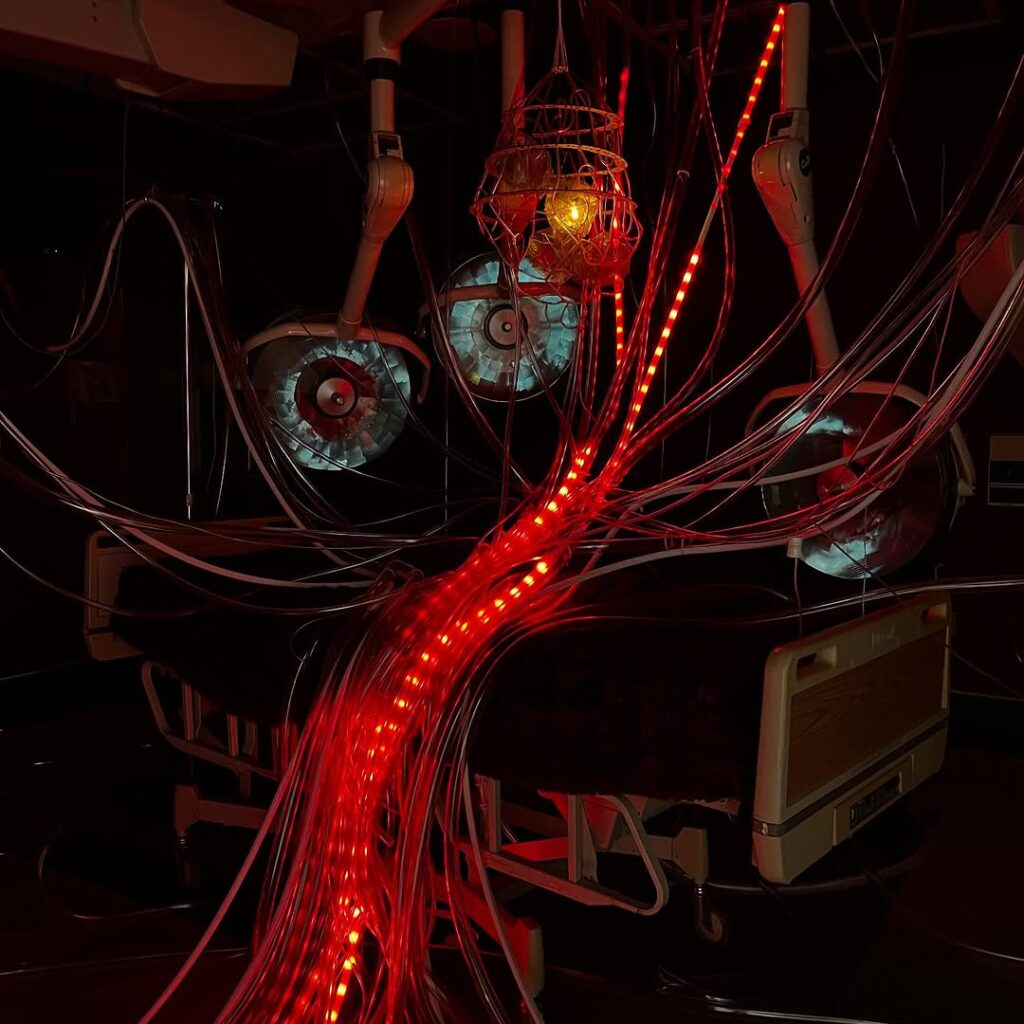
Rewiring the surgery space in Room 6 of the Resilience sector, HCI specialist Anna Matsumoto, presents Breathworks. The installation loops networks of industrial red wiring and mechanical components to reimagine the clinical space as a living, breathing organism. Instead of hiding the harsh mechanical noise, the work weaponizes the hum to guide a rhythmic, light-and-air ecosystem that mimics the human respiratory system.
Layers of Hope – Corrie Sullivan
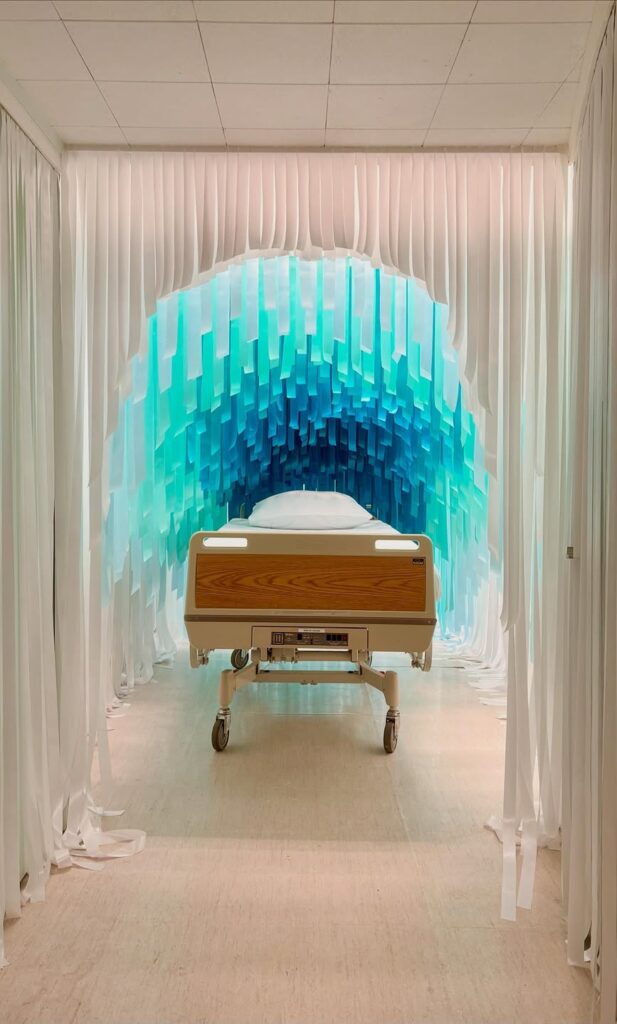
For Room 53, sector Hope, textile artist Corrie Sullivan presents Layers of Hope, an immersive ribbon tunnel that transforms structural labor into a pristine, mathematical gradient. At the center sits a solitary hospital bed enveloped by dense layers of hanging ribbons, forming a lightweight architectural barrier that conveys emotional distance.
The installation employs neutral perimeter tones that transition into deep shades of teal, drawing the eye through the tunnel to suggest a subtle presence of life. The resulting sanctuary creates a quiet, contained stillness where the very first seeds of hope often begin.
David Otis Johnson
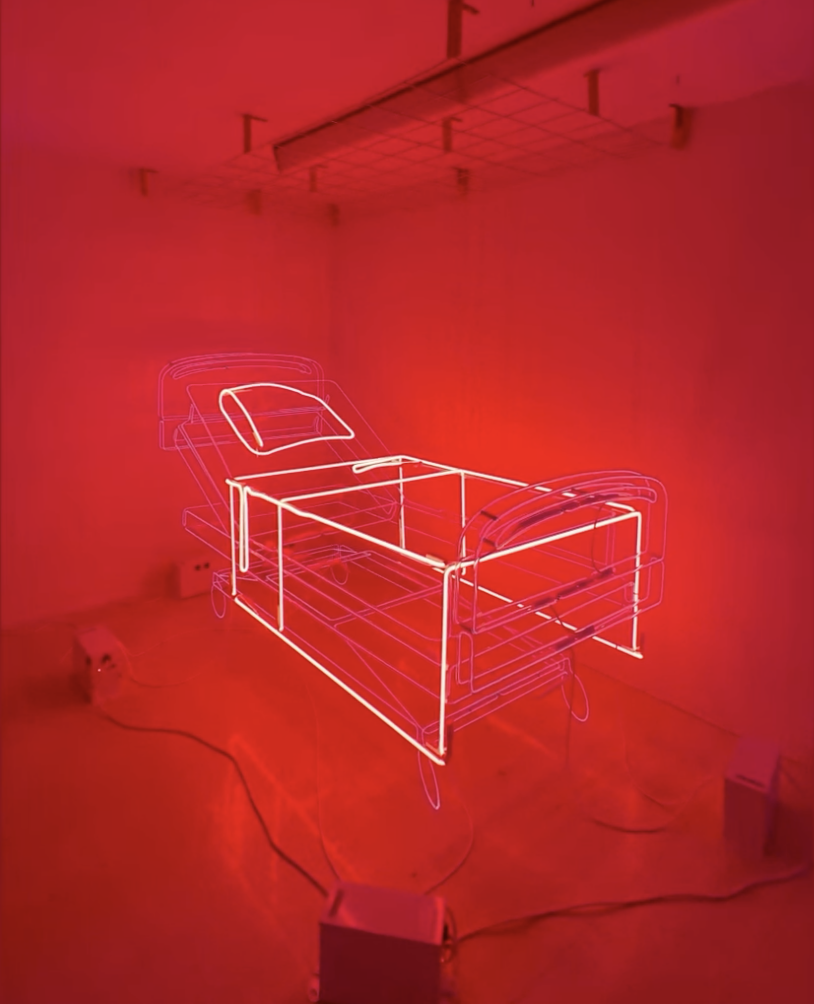
For the Resilience sector, Southern California-based fine artist and master glassblower David Otis Johnson presents a site-specific installation sculpted entirely from neon glass tubes. Suspended within the decaying ward, the pristine, high-voltage medical bed emits a bioluminescent glow reminiscent of deep-sea organisms. Rather than relying on digital fabrication, Johnson’s luminous work uses raw material purity to anchor the space — proving how uncompromised light can hold its ground against architectural collapse.
Popup Information:
Hospital of Emotions ⚲
St. Vincent Medical Center
2131 W 3rd St, Los Angeles, CA 90057
Open 1000 – 2010, 5.27 – 7.31