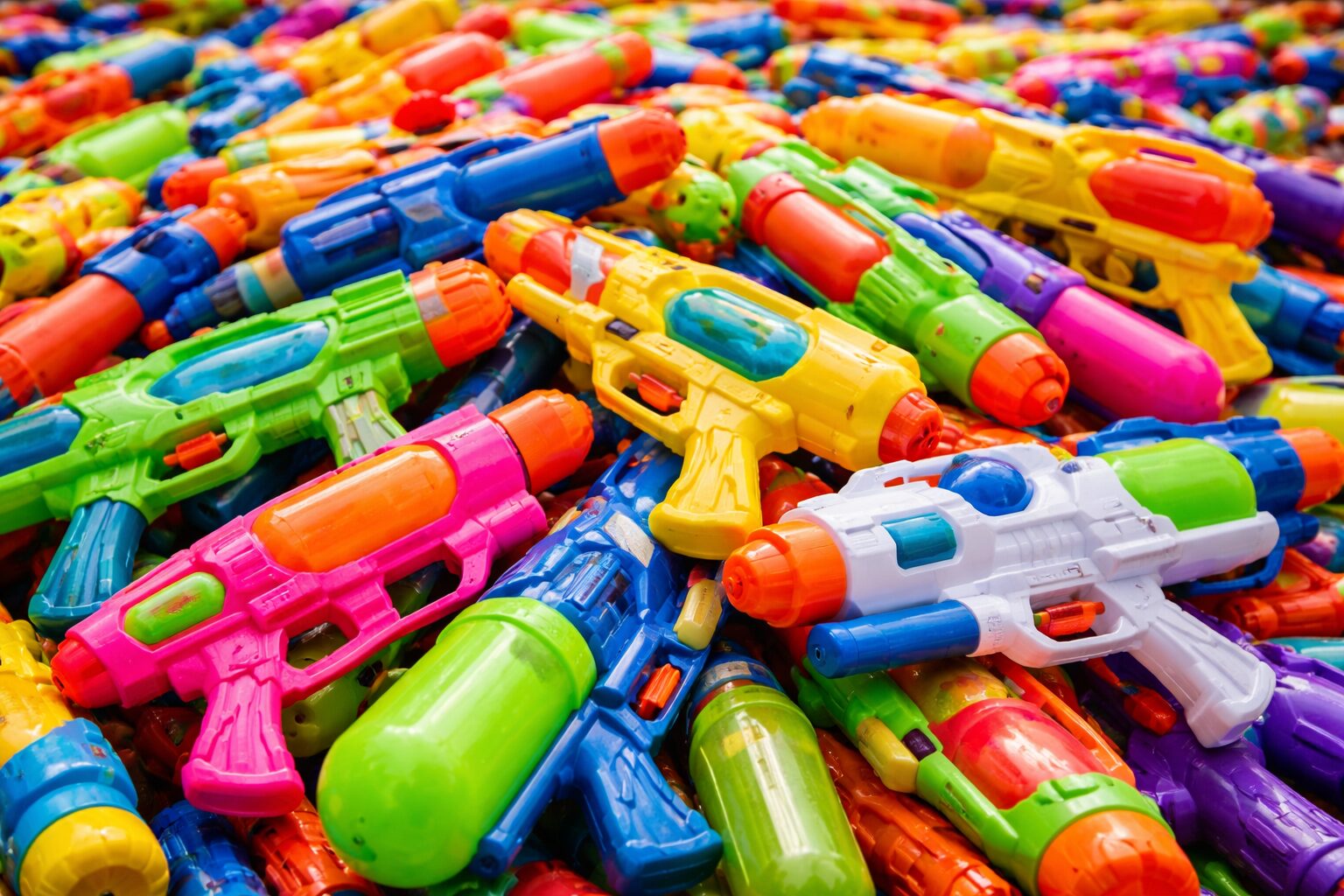
Songkran, Thailand’s New Year holiday, is globally recognized for its annual nationwide water fights — a high-energy, modern evolution of the traditional water-pouring practices known as Song Nam Phra (สรงน้ำพระ) and Rod Nam Dum Hua (รดน้ำดำหัว). While today’s image of the festival is one of neon-soaked chaos, its origins are rooted in deep acts of blessing and spiritual cleansing. What began as a gentle ritual of pouring scented water over Buddha statues and the hands of elders has transformed into a massive, city-wide celebration of renewal.
The timing of the festival is as much a matter of survival as it is of tradition. Held during Thailand’s hottest season — with temperatures consistently hovering between 38°C and 42°C — the festivities provide essential, albeit playful, relief from the crushing humidity. In this environment, water serves as both a medium for blessing and essential thermal relief. For five days, the streets across Thailand become a warzone of showering silhouettes, where the boundary between locals and travelers dissolves under constant, cooling splashes.
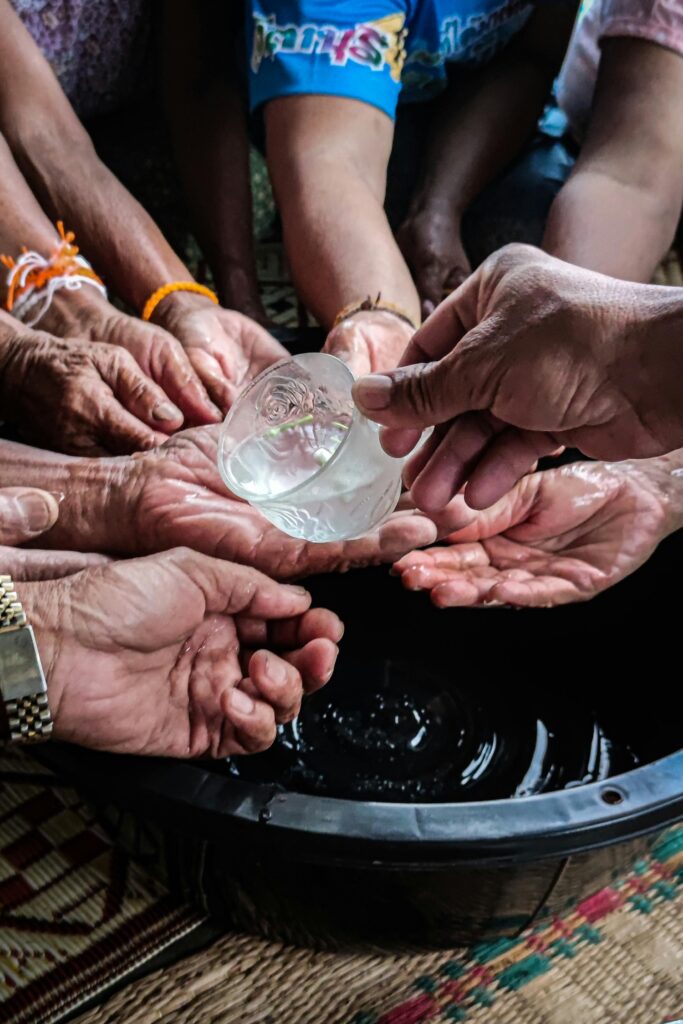
Rod Nam Dum Hua (รดน้ำดำหัว), the practice of pouring jasmine-scented water over elders’ hands, shows gratitude and respect while seeking blessings.
The Scale of the Celebration
The sheer magnitude of this year’s Songkran festivities has been staggering. According to official data from the Bangkok Metropolitan Administration (BMA), celebrations within the capital alone drew nearly 5 million participants. This represents a sharp 93.4% increase from the previous year, signaling a massive cultural resurgence following years of pandemic-related restrictions.
However, with this scale of participation comes an inevitable environmental footprint. When millions of people take to the streets armed with oversized plastic water guns and buckets, the urban landscape quickly shifts from a site of spiritual renewal to a soaking war zone defined by a plastic-laden aftermath. In previous years, the sheer volume of discarded water guns, plastic bags, and single-use containers contributed to an overwhelming spike in municipal waste, adding hundreds of tons of debris to the city’s landfills over the multi-day period.
A New Narrative for Cleanup
Historically, the end of Songkran was marked by a massive logistical headache for city sanitation workers as literal mountains of colorful plastic were left in the wake of the fun. This year, however, the city is approaching the cleanup with a more sophisticated, circular strategy. Rather than simply sweeping the debris into general waste, a new recycling initiative aims to reclaim the materials left on the pavement.
This pivot reflects a growing awareness that the “renewal” Songkran celebrates must also extend to the environment itself. By integrating a structured recovery system for the millions of discarded water guns, the BMA is attempting to bridge the gap between ancient tradition and modern sustainability.
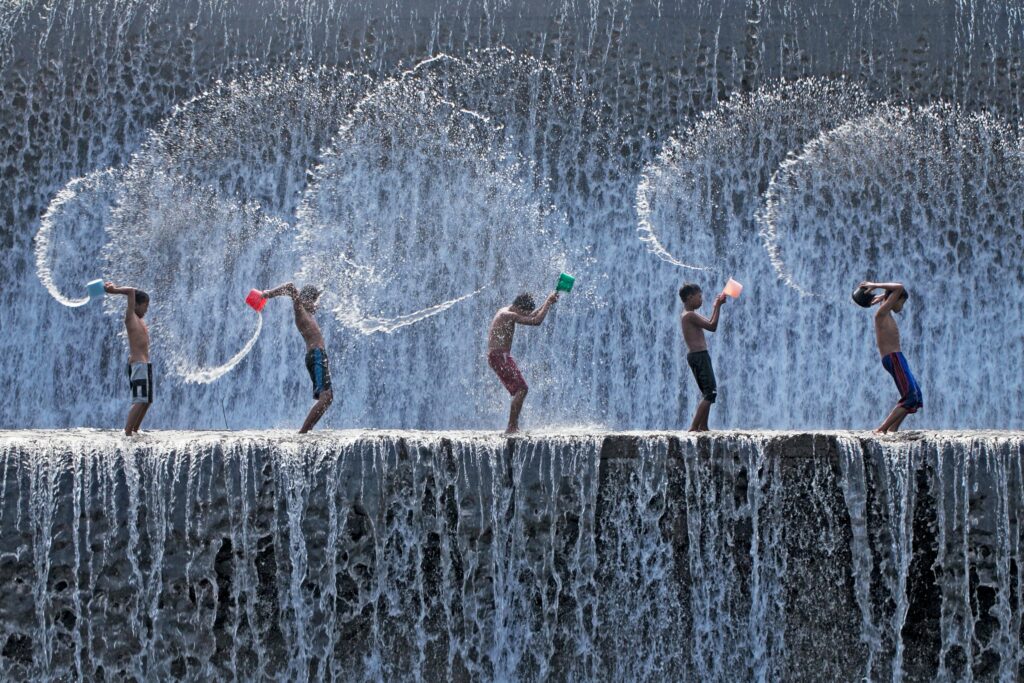
Water pouring is a common practice during Songkran to cleanse oneself of the past year’s residue.
Water Gun Recycling Campaign
As part of its broader push toward a competitive circular waste economy — with the ambitious target of achieving full plastic recycling by 2027 — Bangkok has officially introduced its first dedicated water gun recycling program. This pilot initiative, launched in the immediate wake of the Songkran New Year holiday, serves as a critical test case for how a major metropolis can manage the sudden, concentrated surges of plastic waste that accompany global-scale festivals.
The program is a strategic collaboration with SCGC Chemicals, one of Asia’s leading petrochemical entities focused on the high-tech development of sustainable waste management and green polymers. To ensure the initiative’s success, specialized collection bins were strategically deployed across the city’s major Songkran hotspots, including high-traffic areas like Silom and Khao San Road. These bins were designed to encourage the responsible disposal of used, broken, or unwanted water guns, which are traditionally made from high-density plastics that are difficult to process in standard municipal streams.
Rather than being relegated to general waste streams or left to clog the city’s drainage systems, these plastic pistols are redirected into a sophisticated, resourceful recycling process. By partnering with a firm specializing in green polymers, the city ensures that the recovered plastic is not merely downcycled but reintegrated into the production cycle for high-quality materials. This shift effectively transforms a seasonal waste problem into a sustainable supply of industrial raw materials.
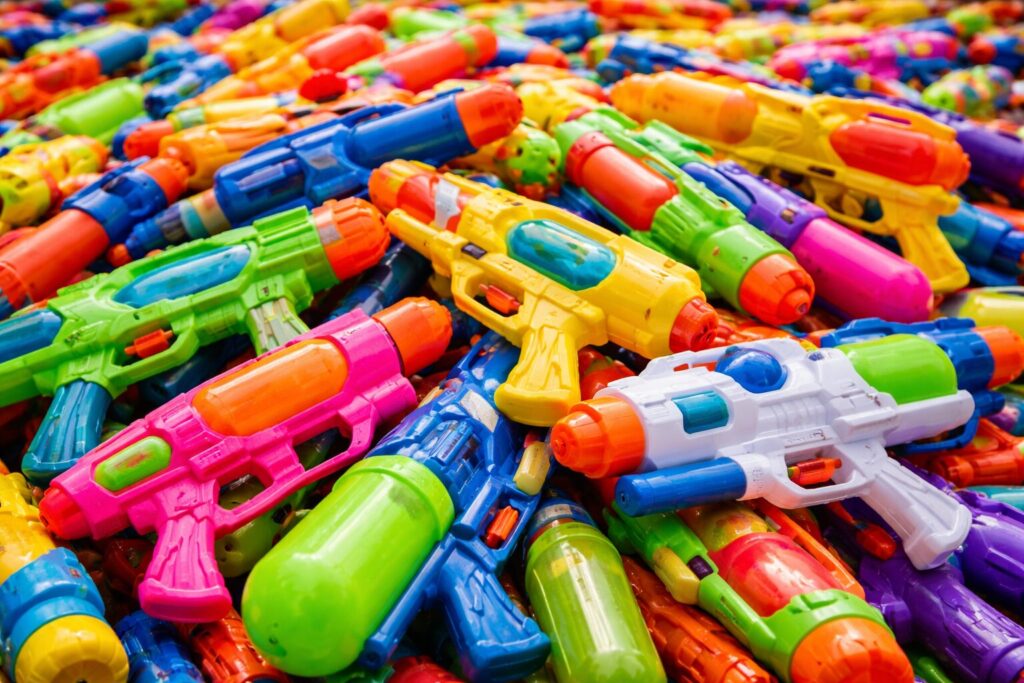
Songkran water gun aftermath can be mitigated through Bangkok’s new recycling initiative.
From Plastic Pistols to Industrial Feedstock
The logistical journey of the collected water guns is a sophisticated exercise in material transformation. Once gathered from the collection points, the plastic pistols are processed through advanced recycling methods, including thermal conversion. This high-heat technology breaks the polymers down into naphtha — a critical liquid hydrocarbon that serves as a foundational raw material for the petrochemical industry. Given the volatility of current global affairs and the resulting strain on traditional supply chains, the ability to reclaim naphtha from domestic waste streams is becoming a strategic necessity rather than just an environmental choice.
Naphtha is the hidden backbone of modern manufacturing, feeding the production of everything from sterile, food-grade packaging and essential medical supplies to high-performance automotive components. By converting the colorful debris of a five-day festival back into high-value usable feedstock, the initiative effectively closes a significant loop in the plastic production cycle. It is a transition from the ephemeral to the enduring — turning short-lived, seasonal novelty items into high-demand industrial inputs.
An Evolution of Tradition
While many participants will choose to enshrine their water guns in storage, awaiting next year’s enlistment into the soaking war zones of Bangkok, the recycling stream provides a meaningful second life for the discarded and the broken. This evolution in waste management mirrors the evolution of the holiday itself. Just as the ancient, scented pouring practices of Song Nam Phra once adapted into today’s slippery military operations, the festival is now adapting once again to meet the demands of a modern, environmentally conscious era.
In a festival fundamentally rooted in the concept of spiritual and physical renewal, this recycling campaign reinforces the vital narrative that heritage and joy can coexist with global responsibility. It suggests that the most successful traditions are those capable of adapting to the world they inhabit, ensuring that the water we pour today doesn’t lead to a landscape of plastic tomorrow. Songkran is no longer just a celebration of the new year, but a recurring opportunity to refine our relationship with the materials we leave in our wake.
Dropoff Locations
Open through April 19, 2026
⚲ Silom Road, Bang Rak district
⚲ Central Park, Bang Rak district
⚲ Khao San Road, Phra Nakhon district
⚲ Benjakitti Park, Khlong Toei district
⚲ EMSPHERE, Khlong Toei district
⚲ Iconsiam, River Park, Khlong San district
⚲ CentralWorld, Pathum Wan district
⚲ The Mall Tha Phra, Thon Buri district
⚲ The Mall Bangkapi, Bang Kapi district