Today, a press of a button magically renders a letter on the screen, and a couple of minutes is all it takes to tell a story. But before typewriters or even pen and paper, a more primitive and arguably more stunning craft was used to log important information: the lontar.
Deriving its Javanese name from the rontal leaf of the palmyra palm (Borassus flabellifer), the lontar is a tradition of highly preserved palm-leaf manuscripts etched with the history and legends of ancient Asia. Long before paper arrived in the archipelago, these cured leaves served as the primary repository for the region’s collective memory. While simply the scribal method of choice during its prime over two thousand years ago, these lontars are now considered sacred pages by the Balinese, still kept safe to commune with Saraswati, the goddess of knowledge.
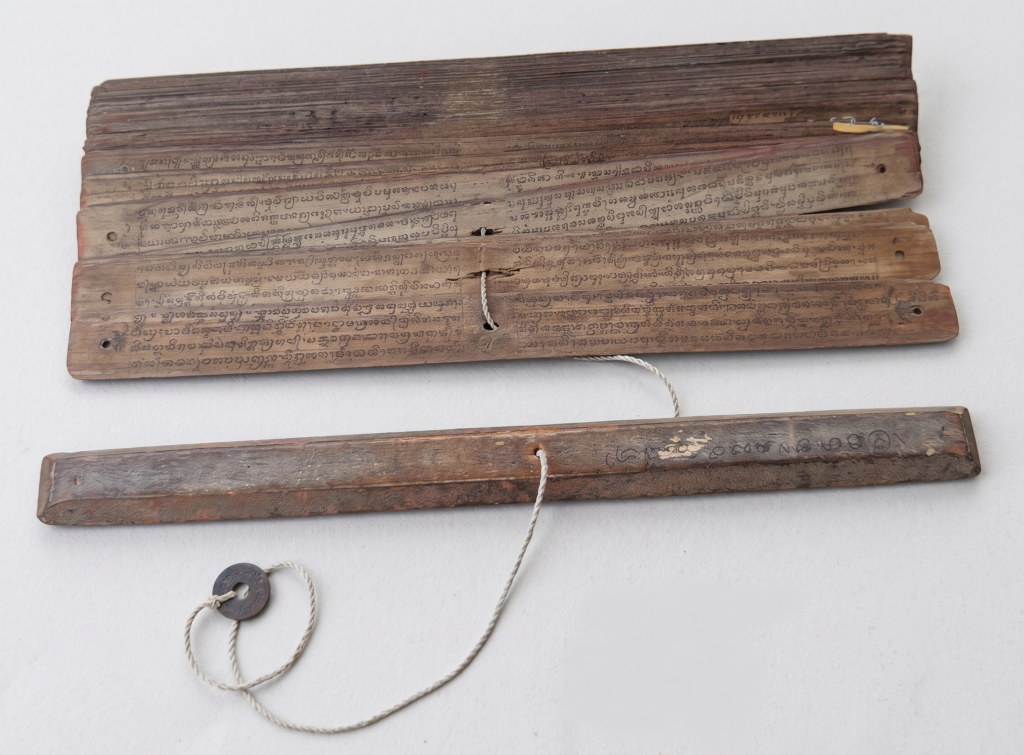
A lontar manuscript etched in Balinese script (Aksara Bali), depicting the epic tale of Arjuna Wiwaha.
Like many of the valued traditions we’ve covered — jamu, koinobori, and gongjak–seon — lontars were originally used by aristocratic elites before spreading to religious specialists, healers, and commoners. As a result, these scripts are physically engraved with wisdom covering a vast range of subjects — from daily life and medicinal practices to religious rituals and epic poems.
But before a scribe could ever carve a single word of text, the raw palm leaf itself had to undergo a painstaking structural transformation. Here is the intricate, multi-step process behind creating the ancient canvas.
Rontal Leaves
In Southeast Asia, the fanning rontal fronds are used to create everything from woven mats and water scoops to food wrapping and everyday tools. Given this versatility, it is no wonder they became the preferred surface for recording information in ancient Indonesia.
Back then, paper was still a well-kept secret in China and highly perishable in the region’s tropical climate, whereas native rontal palms were both abundant and resilient. Yet, even these sturdy leaves were prone to environmental damage and hungry insects. To outsmart nature, ancient craftspeople developed a multi-step process that transformed fragile fronds into near-indestructible pages.
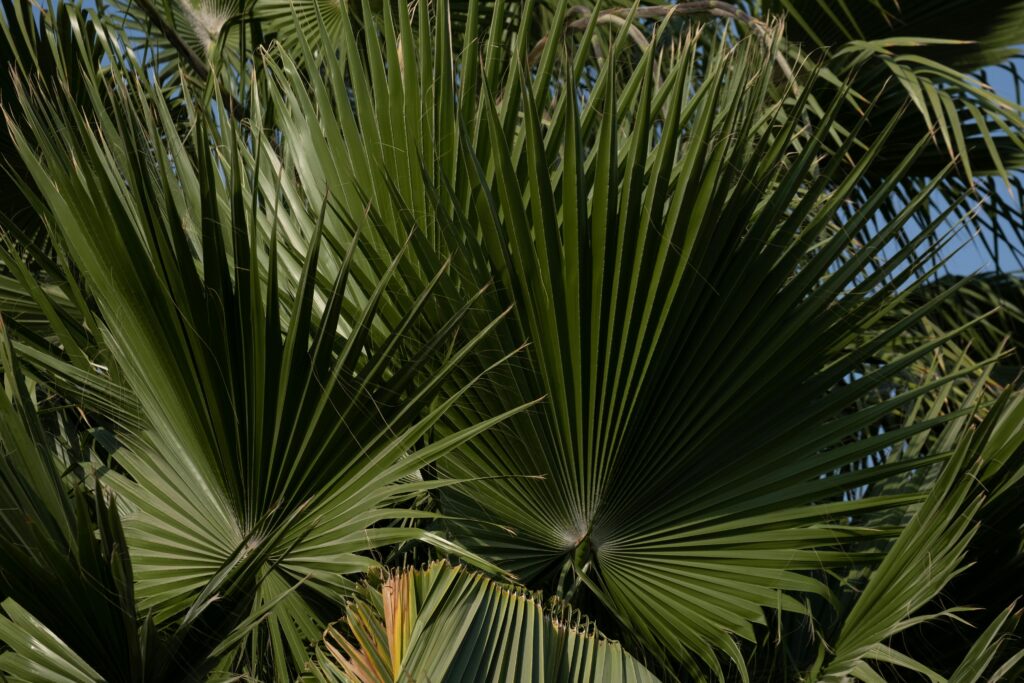
Fronds of the rontal palm (Borassus flabellifer), traditionally used across Southeast Asia to create everything from woven mats and utilitarian tools to sacred lontar manuscripts.
The Lontar Preparation Process
To turn fragile leaves into artifacts withstanding hundreds of years, the raw flora of the Borassus flabellifer (palmyra palm) must undergo a rigorous alchemical transformation. Through an extensive multi-step process, craftspeople strip the leaves of their natural vulnerability, curing them into perfectly flat, hand-held canvases ready to carry narratives across centuries.
Harvesting and Cleaning
The intensive process of making these ancient books begins with artisans harvesting mature leaves from the palm and stripping away their thorny midribs.
The leaves are then cut into uniform lengths and soaked in running water to wash out chlorophyll, plant sugars, and any traces of insects. By doing so, artisans reduce the risk of having their sacred records warp from extreme climates, rot from internal fermentation, or be devoured by pests.
Herbal Preservation and Pressing
The stripped leaves are then boiled for up to eight hours in a brine infused with herbs like cloves, ginger, salt, cumin, pepper, lemongrass, and medicinal tree bark. This complex bath closes the pores and seasons the leaves, further preventing degradation and rendering them unappealing to pests. Much like pottery, the cooked leaves are dried under damp conditions to prevent cracking and wrinkling before being piled under a heavy wooden pamlagbag press to flatten for six to twelve months. This ensures that the leaves will not warp or crack when carved.
Trimming and Perforation
The flattened leaves are then collected, cut to exact dimensions, and smoothed down along their edges. The artisans use a specialized punch device (cempurit) to pierce three holes across the pages — one at the left, right, and center — for binding. This precise puncture work ensures the fragile leaves align perfectly without splitting, creating a uniform edge that protects the manuscript from fraying over time.
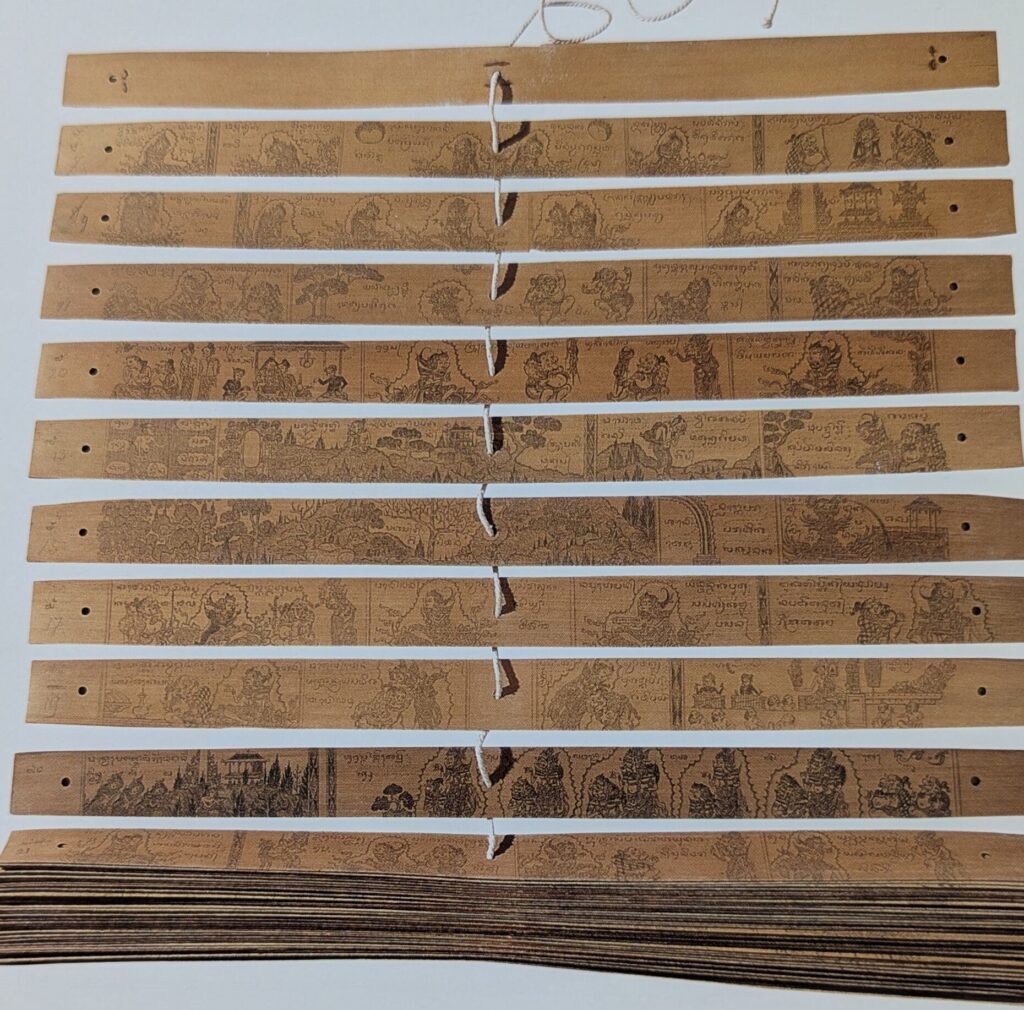
A preserved lontar manuscript intricately illustrating the epic story of Arjuna Wiwaha.
Inscribing and Inking
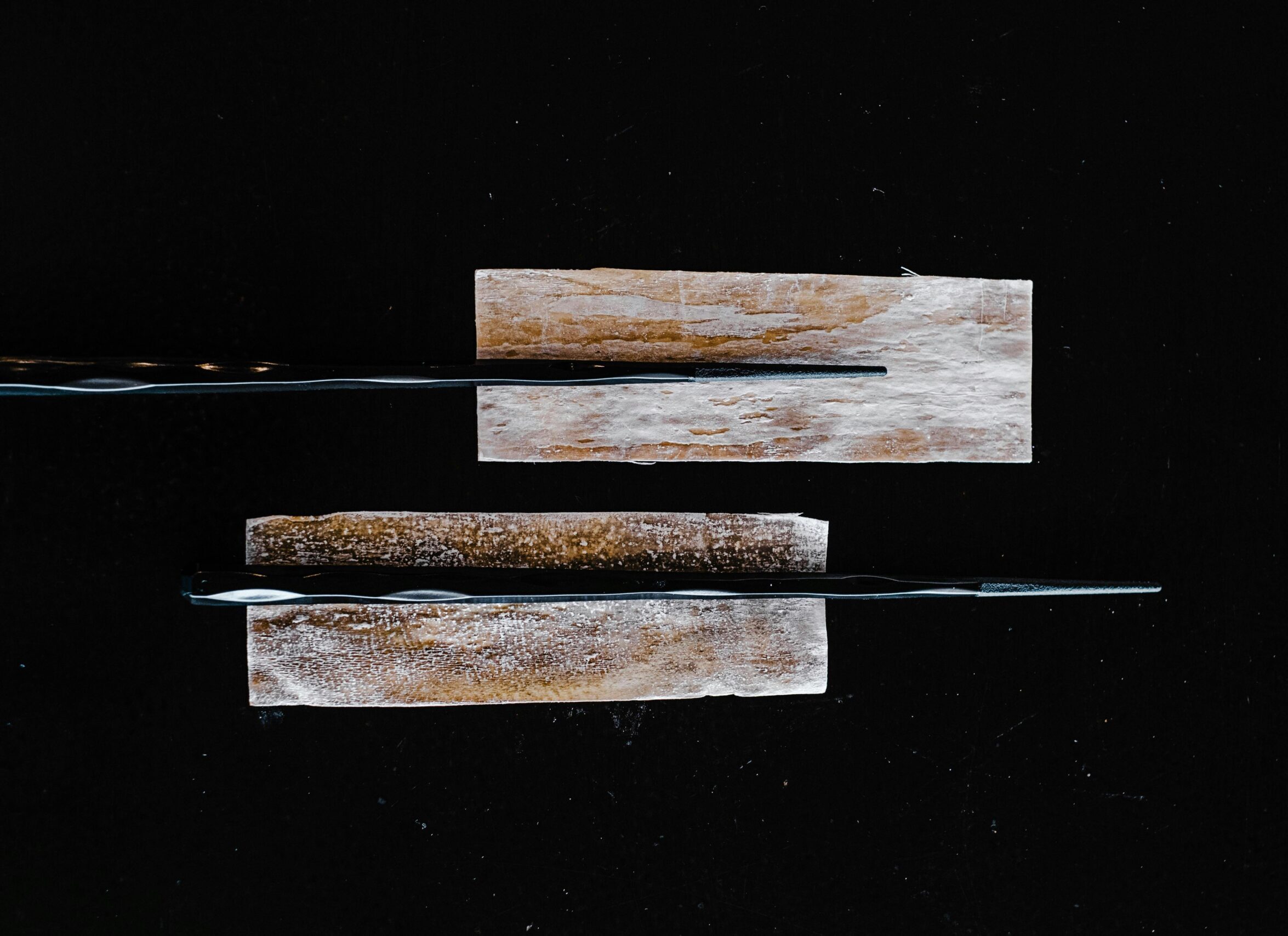
Mimicking the precision of traditional temple carving on a leaf canvas, scribes etch memos, stories, or ancient epic comics into the lontar pages using a pengerupak — a specialized iron stylus with a sharp, triangular tip designed to carve both thin and bold strokes. It is believed that such carvings dictated the written language, shaping it to be more curvy than angular to avoid tearing the leaf. Artisans alternate between two variations of this iron knife, depending on whether they are engraving four-line script verses on double-sided pages or illustrations.
Because the stylus marks the leaves without ink, these botanical masters also developed their own natural inking method. Charring candlenut into ash and soot, scribes rub the dark, oily paste across the pages, embedding the black pigment into freshly incised lines. When the excess is buffed off with a cloth, the lontar reveals the stained record, contrasting against the yellow, herb-tinted leaf. Candlenut is chosen for this step because its natural oils keep the ink in the carved grooves and condition the manuscript fibers, helping to preserve them for centuries.
Finishing Touches and Storage
To complete the canvas frame, the pages get their borders trimmed one last time, and their edges painted with a vibrant red pigment (kincu). These delicate leaves are then sandwiched between two protective wooden or bamboo covers — traditionally crafted from jackfruit or teak wood — which are cut to match the leaves’ exact dimensions, sanded smooth, and decorated with relevant carvings.
The covers and pages are loosely threaded together through their aligning holes using a cotton string. This cord is often anchored at one end with a traditional coin, which acts as a page stop and indicates the start of the script.
To protect the finished manuscripts from humidity and pests, they are placed inside a keropak, a specialized, heavy-duty storage box carved from the same wood as their covers. With proper care, lontar manuscripts last an average of 300 to 600 years, at which point they become brittle from oil loss and require transcription onto a new set.