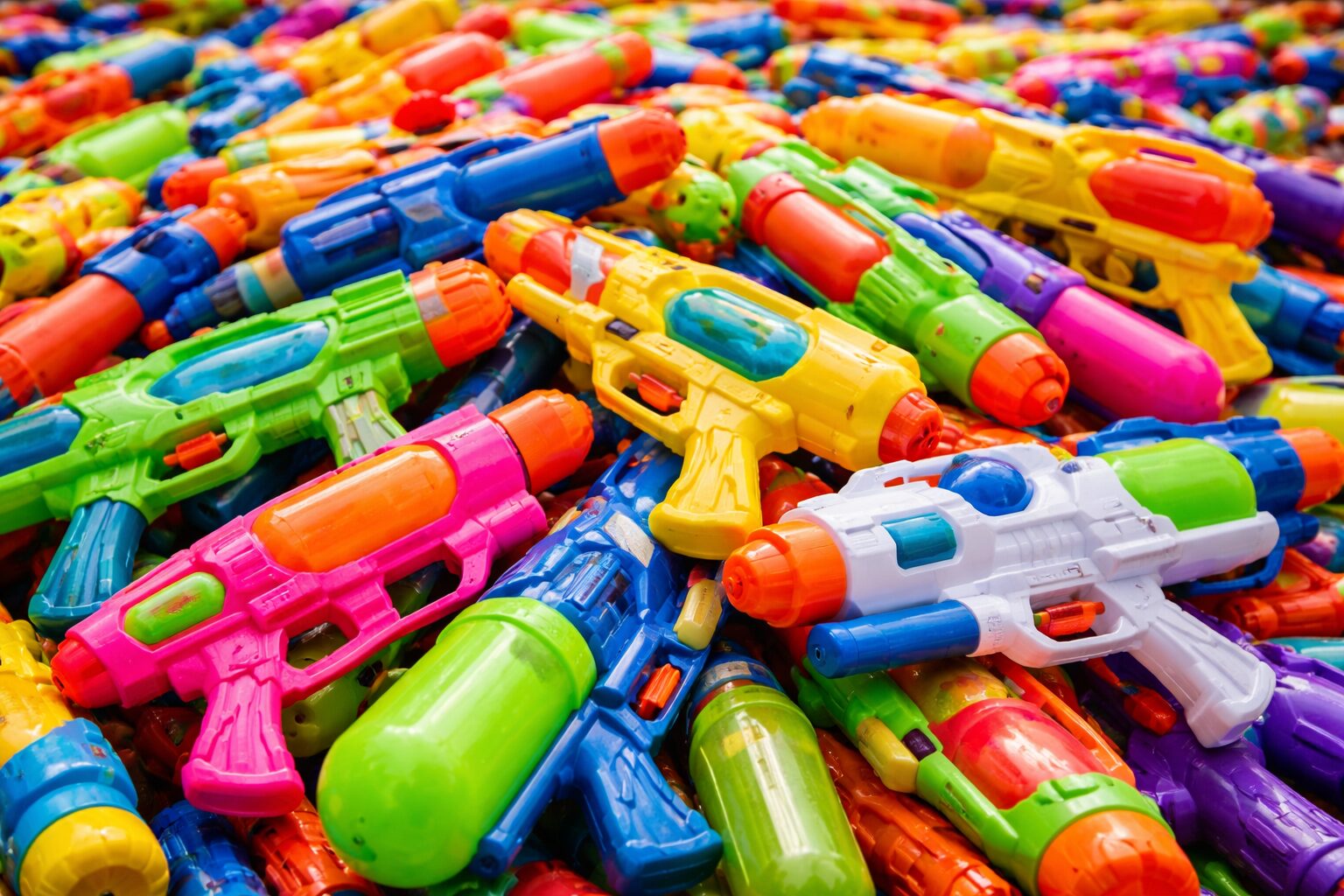
Songkran, Thailand’s New Year holiday, is best known for its annual nationwide water fights, a modern evolution of their traditional water pouring practices, Song Nam Phra (สรงน้ำพระ) and Rod Nam Dum Hua (รดน้ำดำหัว). What began as acts of blessing and cleansing has turned into celebrations, where locals and travelers alike take to the streets armed with water guns and playfully douse one another as gestures of renewal. Held during Thailand’s hottest season — with temperatures often reaching 38°C to 42°C (100°F to 108°F) — the festivities double as both cultural practice and essential relief from the heat.
According to the Bangkok Metropolitan Administration, this year’s celebrations in the city drew nearly 5 million participants, a sharp 93.4% increase from the previous year. With that scale, the streets turn into a soaking war zone with an inevitable plastic-laden aftermath. In past years, discarded water guns contributed to significant plastic waste, adding to the hundreds of tons generated over the multi-day festival.
This year, the city approaches the cleanup differently.
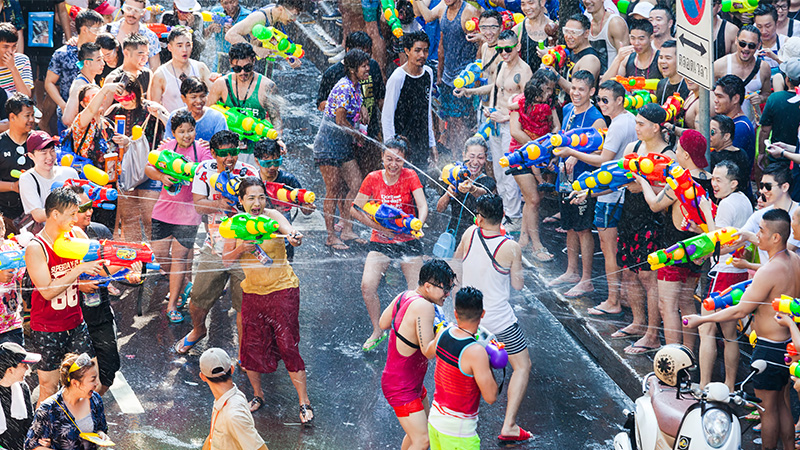
Nearly everyone of all ages is armed with a water gun during Songkran celebrations in Bangkok. The city aims to eliminate the number of water pistols that end up in waste bins with minimal impact on festivities. (Source: Expatliving)
Water Gun Recycling Campaign
As part of its broader push towards a circular waste economy — with a target of achieving full plastic recycling by 2027 — Bangkok has introduced its first dedicated water gun recycling initiative.
In collaboration with SGC Chemicals, one of Asia’s leading petrochemical companies focused on sustainable waste management and green polymers, collection bins have been set up in major Songkran celebration hotspots to encourage the responsible disposal of used or unwanted water guns. Rather than ending up in general waste streams, these plastic pistols are redirected into a resourceful recycling process.
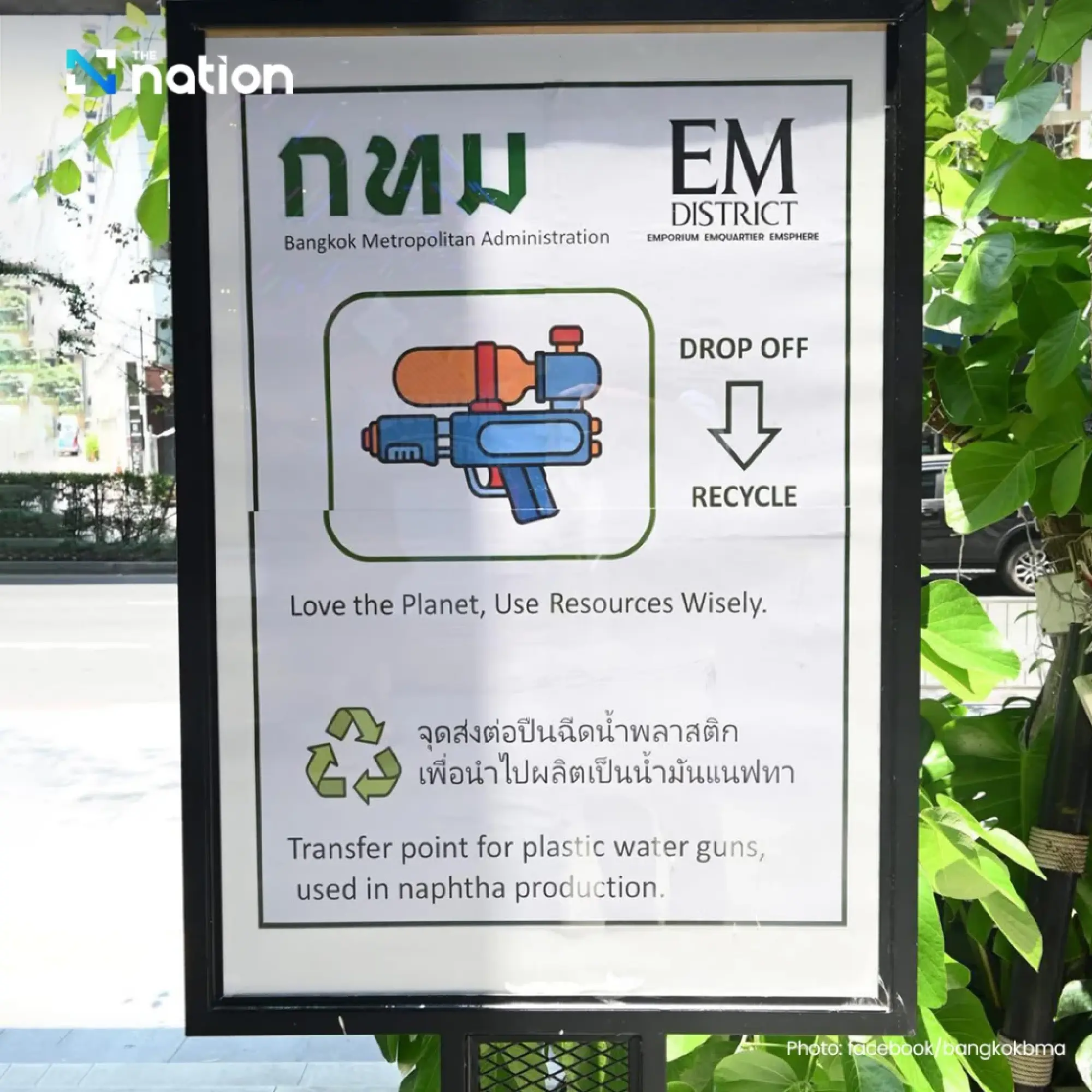
Dedicated water gun recycling drop-off at EMSPHERE. (Source: Nation Thailand)
Plastic Pistols into Raw Material
Once collected, the water guns are processed through advanced recycling methods, including thermal conversion, to be transformed into naphtha — a key raw material used in the production of new plastics and a limited resource given current world affairs.
Naphtha plays a foundational role in modern manufacturing, feeding into everything from food-grade packaging and medical supplies to automotive components. By converting post-festival waste back into usable feedstock, the initiative closes part of the loop in plastic production — turning short-lived novelty items into long-term industrial inputs.
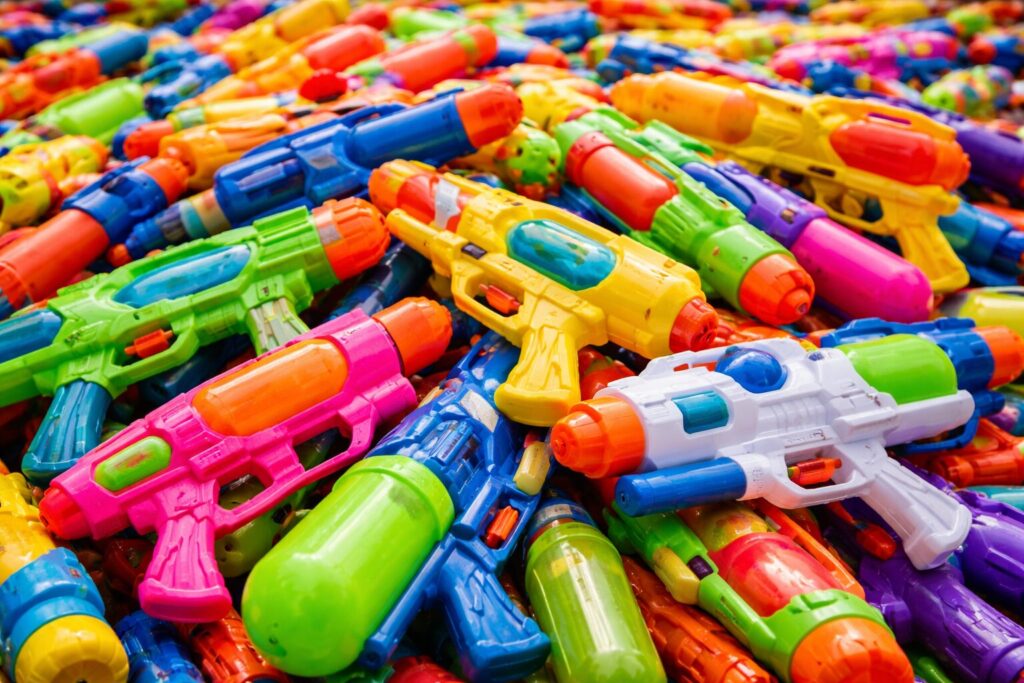
Songkran water gun aftermath can be mitigated through Bangkok’s new recycling initiative.
While some water guns are enshrined until next year’s enlistment, others are now getting a second life through the recycling stream. Just as scented pouring practices turned into slippery military operations, the shift marks a meaningful evolution in how large-scale celebrations are managed. In a festival rooted in renewal, the campaign reinforces that traditions can adapt while maintaining joy and responsibility.
Dropoff Locations
Open through April 19, 2026
⚲ Silom Road, Bang Rak district
⚲ Central Park, Bang Rak district
⚲ Khao San Road, Phra Nakhon district
⚲ Benjakitti Park, Khlong Toei district
⚲ EMSPHERE, Khlong Toei district
⚲ Iconsiam, River Park, Khlong San district
⚲ CentralWorld, Pathum Wan district
⚲ The Mall Tha Phra, Thon Buri district
⚲ The Mall Bangkapi, Bang Kapi district